The Wild Medlar: History, Autumn Health Benefits, and Jam
When we think of the medlar tree (Mespilus germanica), we often focus on the nobility of its wood within Basque craftsmanship. However, this slow-growing tree holds a fascinating history directly linked to its fruit, which was the primary reason it began to be cultivated and spread across Europe millennia ago.
In this article, we explore the fascinating origins of the European medlar, its traditional medicinal properties, and how to make an excellent homemade jam using this autumn treasure.
-
✓ Historical origins: From the Caspian Sea to the Roman Empire thanks to its fruit
-
✓ Medicinal and digestive properties of the wild medlar
-
✓ How to treat the fruit after the autumn harvest
-
✓ Step-by-step recipe: Traditional medlar jam with cinnamon and lemon
From Asia Minor to Europe: The History of the Medlar Fruit
Although its scientific name (Mespilus germanica) refers to Germania, the European medlar is actually native to Asia Minor and southeastern Europe, and it was the Romans who introduced it to Germanic lands.
Its millennia-old history is closely tied to the use of its fruit:
-
Over 3,000 years ago: It was already cultivated in the Caspian Sea region.
-
Around 700 BC: It arrived in Greece, later spreading across the Italian peninsula around 200 BC.
-
During the Roman Empire and the Middle Ages: It became an important fruit crop, particularly valued for its remarkable medicinal properties on the digestive system.
Health Benefits and Fruit Preparation
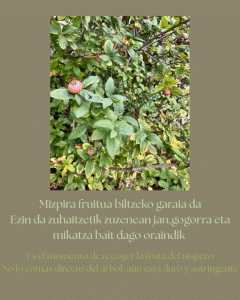
Wild medlars cannot be eaten directly off the tree at the end of autumn; they require a traditional ripening process to soften their texture and unlock their full potential:
-
The harvest: They are harvested in autumn, ideally after the first frosts, which help soften the fruit.
-
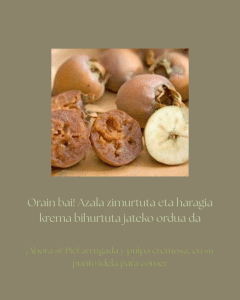
Resting (bletting): The fruit is left to rest for a few weeks on a cool surface until the skin turns a dark shade and the flesh becomes soft and creamy.
-
Digestive benefits: Traditionally, medlars have been used for their richness in pectin and tannins, making them an excellent liver protector and a highly effective ally for regulating intestinal transit.
Artisanal Recipe: Medlar Jam
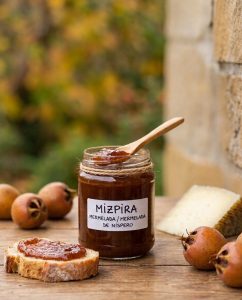
Taking advantage of the ripe fruit’s natural high pectin content, we can prepare a dense, aromatic homemade jam without adding any artificial thickeners.
Ingredients
-
1 kg of ripe medlar flesh (skin and seeds removed)
-
400 g of sugar
-
Juice of 1 lemon
-
1 cinnamon stick
Step-by-Step Preparation
-
Carefully extract the soft flesh from the ripe medlars and discard the seeds.
-
Place the flesh in a saucepan along with the sugar, lemon juice, and cinnamon stick.
-
Simmer over low heat for about 35 minutes, stirring regularly to prevent the mixture from sticking to the bottom.
-
Once the preparation reaches a glossy, thick texture, remove the cinnamon stick.
-
Pour the jam into sterilized glass jars and seal them properly for long-term preservation.
Tradition, History, and Nature
The medlar is a clear example of how nature and history go hand in hand. From its expansion in the Mediterranean antiquity for its dietary and medicinal virtues to its deep connection with Basque craftsmanship, this tree teaches us the value of patience and respect for the rhythms of the earth.
If the history of this tree fascinates you and you would like to discover the other great secret it holds, we invite you to read our article where we explain in detail why medlar wood is used to craft our makilas and how we shape it step by step in our workshop.