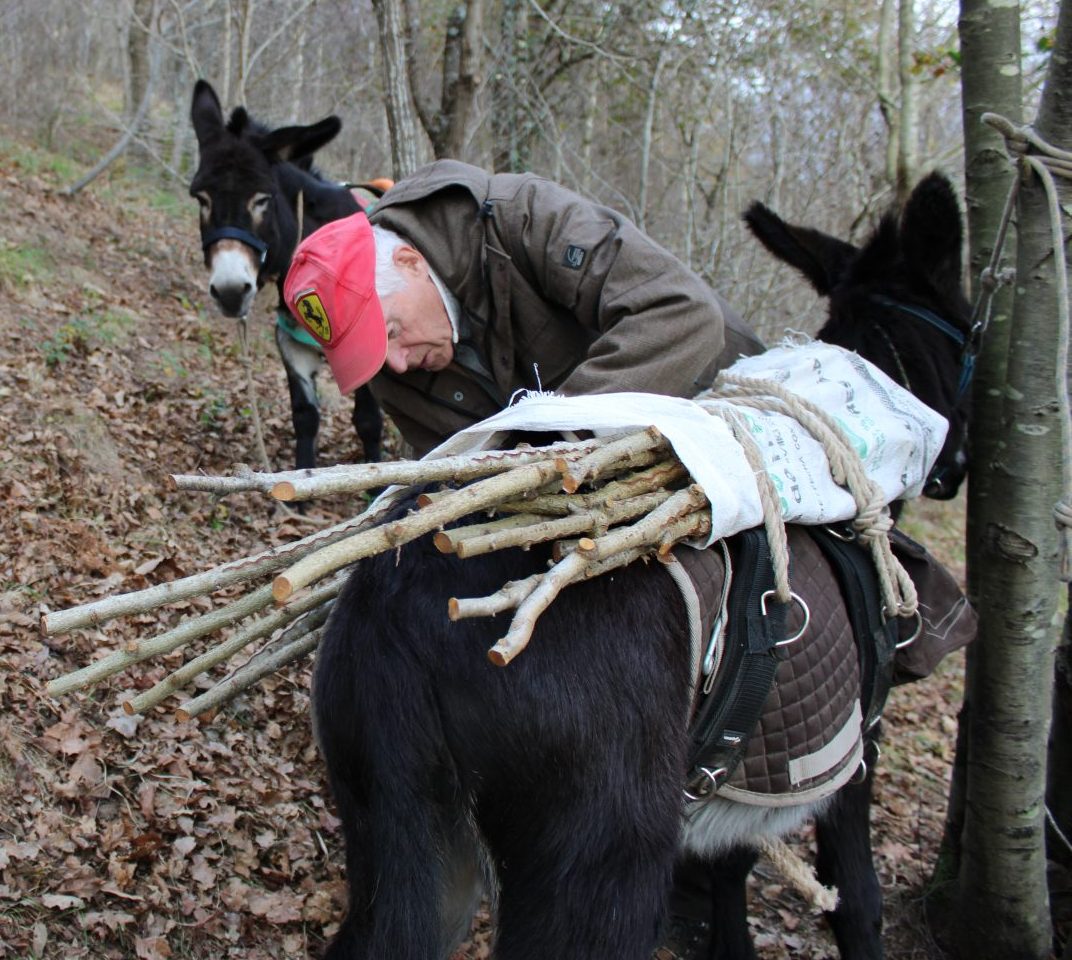
Harvesting wild Medlar: The Origin of Every Basque Makila
The Magic of wild medlar Harvesting: The Soul of the Basque Makila
At Alberdi, every makila we craft begins its story long before it reaches our makila workshop in Irún. For lovers of the traditional Basque walking stick, discovering the origin of this Basque craftsmanship is as fascinating as holding the finished piece. At this time of year, while many rest during winter, we are in a crucial moment: harvesting the medlar branches marked in spring.
Scarification: The Tattoo That Brings Each Basque Walking Stick to Life
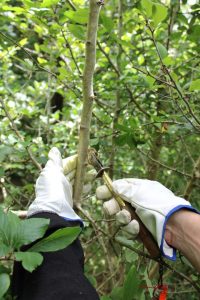
Each Basque makila begins with a delicate gesture: scarification. In spring, our artisans select the most suitable medlar branches and make small hand-cut incisions. This process is not decorative—it is the start of what will make each Basque walking stick a unique piece of Basque craftsmanship.
Over months, the tree naturally heals the cuts, creating a relief no machine could replicate. This pattern distinguishes an authentic traditional Basque walking stick from any other handmade walking stick. Each line, each curve tells the story of the Basque land, climate, cold winters, and dry or rainy summers.
Harvesting wild medlar: A Patient and Respectful Task
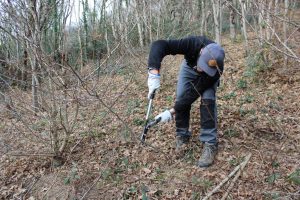
Winter arrives, and with it the time to return to the trees marked months ago. Harvesting medlar requires patience, care, and respect for nature. Each branch is carefully selected, and only the best are cut to guarantee the quality of the future Basque makila.
Branch by branch, our makila makers work with dedication, aware that each piece leaving our makila workshop carries years of preparation. Though physically demanding, this work deeply connects us with nature and allows us to appreciate every detail of the traditional Basque walking stick we are creating.
From Tree to Makila Workshop: Transforming Medlar
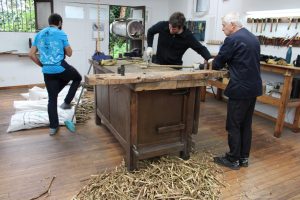
Once harvested, the medlar branches enter our makila workshop, where a meticulous process begins, lasting 5–10 years. First, the bark is carefully removed. Then, the branches are heated in an oven to stabilize the wood and straightened multiple times. Finally, slow drying ensures that each Basque makila is strong, durable, and flexible, ready to accompany its owner for life.
The Essence of the Makila: Tradition, Art, and Nature
Marked níspero not only shapes the natural relief but also transmits the energy of the tree and Basque landscape. Each Basque makila is one-of-a-kind, the result of time, patience, and the skill of our makila makers.
When you hold a makila, you feel not only its touch, balance, and beauty of details: you are holding centuries of tradition and the soul of Basque craftsmanship. Each traditional Basque walking stick tells a unique story of climate, land, tree, and artisan.
This Year’s Harvest: A New Cycle
Now, as we continue harvesting wild medlar, branch by branch, with care and dedication, we feel the satisfaction of participating in a cycle repeated year after year. Winter can be harsh, but each fruit, relief, and finished piece reminds us why the Basque makila is more than a stick: it is culture, tradition, and passion.
If you wish to experience this process up close, visit our makila workshop and discover the story behind each traditional Basque walking stick; we await you in Irún. Each visit is an opportunity to experience the essence of our Basque craftsmanship and take a piece of Basque culture with you.